
Cardano
Price Chart
Market Cap
24h Volume
7d Change
Circulating Supply
24h High
24h Low
Price Change 24h
Price Statistics
Supply & Market Info
External Resources
About Cardano
Cardano is a third-generation, proof-of-stake blockchain platform designed to be more secure, scalable, and energy-efficient than earlier blockchain networks. Founded in 2017 by Charles Hoskinson (co-founder of Ethereum) and Jeremy Wood, Cardano takes a unique research-driven approach, with every feature and upgrade backed by peer-reviewed academic research.
Unlike most cryptocurrency projects that launched with a whitepaper and moved quickly to market, Cardano was built from the ground up using formal methods and scientific principles. The platform is developed by Input Output Global (IOG, formerly IOHK), supported by the Cardano Foundation, and commercialized through Emurgo—creating a three-pillar ecosystem focused on sustainable, long-term blockchain development.
Cardano's native cryptocurrency, ADA (named after 19th-century mathematician Ada Lovelace, widely regarded as the world's first computer programmer), powers the network's proof-of-stake consensus mechanism and enables smart contracts, decentralized applications (dApps), and decentralized finance (DeFi) protocols.
Key Features
Research-Driven Development
Cardano stands alone in the crypto space for its academic rigor. Every protocol upgrade undergoes peer review by cryptographers and computer scientists before implementation. IOG has published over 139 research papers—the original Ouroboros paper has been cited more than 1,200 times according to Google Scholar—making Cardano one of the most academically scrutinized blockchains in existence.
This methodical, evidence-based approach prioritizes security and sustainability over speed to market, positioning Cardano for long-term viability in institutional and government applications.
Ouroboros Proof-of-Stake Consensus
Cardano uses Ouroboros, the first provably secure proof-of-stake consensus protocol, developed by a team led by Professor Aggelos Kiayias at the University of Edinburgh. Unlike energy-intensive proof-of-work systems (Bitcoin, pre-2022 Ethereum), Ouroboros selects validators based on the amount of ADA they stake, dramatically reducing energy consumption.
In February 2021, Charles Hoskinson estimated Cardano's network used only 6 GWh annually—less than 0.01% of Bitcoin's 110.53 TWh. This makes Cardano one of the greenest major blockchain platforms, addressing environmental concerns that plague proof-of-work cryptocurrencies.
Ouroboros has evolved through multiple versions—Classic, Praos, Genesis, Chronos, and the upcoming Hydra and Leios upgrades—each adding enhanced security, scalability, and functionality.
Layered Architecture
Cardano employs a unique two-layer architecture separating settlement from computation:
- Cardano Settlement Layer (CSL): Handles ADA token transfers and tracks all account balances
- Cardano Computation Layer (CCL): Executes smart contracts and runs decentralized applications
This separation allows for greater flexibility, easier upgrades, and enhanced security. If a smart contract vulnerability emerges, it doesn't compromise the entire network's integrity—each layer can be upgraded independently.
Formal Verification & Security
Cardano smart contracts use Plutus, a platform built on Haskell, a functional programming language favored by financial institutions and defense contractors for its security properties. Formal verification allows developers to mathematically prove their code behaves as intended, reducing bugs and vulnerabilities that have plagued other smart contract platforms.
This rigorous approach makes Cardano particularly attractive for high-stakes applications in finance, healthcare, supply chain management, and government services where security and reliability are non-negotiable.
Use Cases & Adoption
Decentralized Finance (DeFi)
Cardano's smart contract capabilities, enabled by the Alonzo upgrade in September 2021, have spawned a growing DeFi ecosystem. As of early 2026, Cardano hosts 27 unique DeFi protocols with over $160 million in total value locked (TVL), making it the 15th largest chain by DeFi activity.
Major DeFi platforms on Cardano include decentralized exchanges (DEXs), lending protocols, liquid staking platforms, and stablecoin systems. The upcoming USDCx stablecoin integration aims to significantly boost liquidity and DeFi adoption.
NFTs and Digital Collectibles
Cardano has emerged as a popular platform for NFT projects, offering lower transaction fees and faster settlement than Ethereum. The blockchain supports native tokens without requiring smart contracts, making NFT creation more efficient and cost-effective.
Notable NFT projects include art collections, gaming assets, and real-world asset tokenization initiatives. The platform processed over 76 million transactions involving ADA since inception, many related to NFT minting and trading.
Real-World Identity and Credentials
Cardano's partnership with the Ethiopian Ministry of Education represents one of blockchain's largest real-world deployments. In April 2021, IOG announced a system using Cardano and Atala PRISM (IOG's decentralized identity solution) to provide digital IDs and credential verification for five million Ethiopian students.
Similar identity initiatives have launched in:
- Georgia: University credential verification system (2019)
- Zanzibar, Ethiopia, and Burundi: Digital ID programs for citizens
These projects demonstrate Cardano's capability to provide secure, tamper-proof identity infrastructure at national scale.
Supply Chain and Product Authentication
Cardano has been deployed for supply chain transparency in multiple industries:
- Coffee Supply Chain: Ethiopia partnership to track coffee from farm to consumer
- Footwear Authentication: New Balance's 2019 pilot program used Cardano to verify authentic OMN1S Kawhi Leonard basketball shoes
- Agricultural Transparency: Tracking produce from field to table, ensuring food safety and origin verification
Telecommunications and Connectivity
World Mobile Token (WMT), built on Cardano, provides remote mobile network access in Africa with approximately 150 nodes in East Africa as of 2022, bringing connectivity to underserved populations.
Decentralized Governance
With the Chang upgrade and Plomin hard fork in 2024, Cardano implemented CIP-1694, enabling full on-chain governance. ADA token holders can now create, vote on, and implement protocol changes through a decentralized decision-making process, marking IOG's successful transfer of network control to the community.
This positions Cardano as one of the most decentralized major blockchain platforms, with treasury allocation, parameter adjustments, and development funding determined by stakeholder votes rather than centralized entities.
Historical Milestones
2015: Foundation and Research Phase
Charles Hoskinson and Jeremy Wood founded Input Output Hong Kong (IOHK) in March 2015, beginning development on what would become Cardano. Unlike most crypto projects, Cardano spent over two years in research and development before launching.
2017: Byron Era - Genesis and Foundation
September 2017: Cardano mainnet launched with the Byron era, establishing basic infrastructure including wallet software, blockchain explorer, and node software. The initial coin offering (ICO) raised over $62 million, primarily from Japanese investors—earning Cardano the nickname "Japanese Ethereum."
Five rounds of public token sales between September 2015 and January 2017 distributed approximately 25.9 billion ADA (57.6% of max supply) to investors at an ICO price of $0.0024 per ADA.
November 2017: ADA listed on Binance at $0.02, marking its first major exchange listing.
2018-2019: Shelley Era - Decentralization
2018: IOHK partnered with the University of Edinburgh to launch the Blockchain Technology Laboratory, led by Aggelos Kiayias, developer of the Ouroboros protocol. This formalized Cardano's academic research foundation.
2019: Georgia's Ministry of Education partnered with Cardano for credential verification. New Balance announced its authentication pilot program.
2020-2021: Shelley and Goguen Eras
July 2020: Shelley upgrade transitioned Cardano to full decentralization, enabling community-operated stake pools and ending IOHK's control of block production.
2021: Cardano exploded in value and adoption:
- February 2021: DJ Paul Oakenfold announced plans to release album "Zombie Lobster" on Cardano blockchain
- April 2021: Ethiopia Ministry of Education partnership announced for 5 million student IDs
- May 2021: Cardano reached $77 billion market cap, becoming the 4th-largest cryptocurrency
- September 2, 2021: ADA hit all-time high of $3.10
- September 12, 2021: Alonzo upgrade activated Plutus smart contracts, enabling DeFi and dApps
2022-2023: Basho and Continued Growth
Cardano continued infrastructure improvements focused on scalability and optimization. The platform weathered the 2022 crypto bear market while maintaining active development.
2024: Voltaire Era - Governance
September 1, 2024: Chang hard fork implemented CIP-1694, introducing initial on-chain governance features.
Later 2024: Plomin hard fork completed governance transition, enabling full community control through decentralized representative (DRep) voting.
2025-2026: Institutional Expansion
December 2025: Midnight privacy sidechain launched NIGHT token, with mainnet phases scheduled through Q3 2026.
February 9, 2026: CME Group launched regulated ADA futures contracts—standard (100,000 ADA) and micro (10,000 ADA) sizes—marking Cardano's recognition as an institutional-grade asset alongside Bitcoin, Ethereum, Solana, and XRP.
Ouroboros Leios upgrade (parallel block processing for enhanced throughput) entered engineering phase with testnet validation underway.
How Cardano Works
Ouroboros Proof-of-Stake Mechanism
Rather than miners competing to solve cryptographic puzzles (proof-of-work), Cardano uses stake pools and validators:
- Staking: ADA holders delegate their tokens to stake pools or run their own pool
- Slot Leader Selection: Ouroboros selects validators (slot leaders) to create new blocks based on stake weight, using cryptographically secure randomness to prevent manipulation
- Block Creation: Selected validators produce blocks and earn rewards in ADA
- Rewards Distribution: Block rewards and transaction fees are distributed to stake pool operators and delegators proportionally
This process requires minimal computational power, reducing energy consumption by over 99.9% compared to proof-of-work while maintaining security through economic incentives—malicious actors would need to control over 50% of staked ADA, making attacks economically irrational.
Epochs and Slots
Cardano's blockchain operates in epochs (approximately 5 days each), divided into slots (1 second each). Each slot represents an opportunity to create a block. This structured approach ensures predictable block production and enables long-term planning for network participants.
Staking Rewards
ADA holders earn approximately 4-6% annual percentage yield (APY) by staking, though rates vary based on pool performance, saturation, and network parameters. Unlike some proof-of-stake systems, Cardano allows delegation without locking funds—stakers maintain liquidity and can spend or move ADA at any time.
The staking mechanism includes a "pledge" system incentivizing pool operators to stake their own ADA, aligning their interests with delegators and preventing Sybil attacks (one entity controlling multiple pools).
Transaction Processing
Cardano transactions confirm within approximately 20 seconds (one epoch slot), with full settlement finality after several blocks. Transaction fees are calculated based on transaction size and computational complexity, typically ranging from 0.15 to 0.5 ADA ($0.04-$0.13 at $0.27/ADA), far cheaper than Ethereum during congestion.
Smart Contracts and dApps
The Plutus smart contract platform uses Haskell-based programming, enabling developers to write formally verified code. This differs from Ethereum's Solidity, prioritizing security and correctness over ease of use.
Extended UTXO (eUTXO) model enhances Bitcoin's UTXO approach with smart contract capabilities, offering better predictability and parallel processing than account-based models.
Cardano vs. Other Cryptocurrencies
Cardano vs. Ethereum
Similarities:
- Both support smart contracts and dApps
- Both transitioned to proof-of-stake (Ethereum in 2022)
- Both have large developer communities
Differences:
- Development Philosophy: Cardano emphasizes peer-reviewed research; Ethereum favors rapid iteration
- Programming Language: Cardano uses Haskell (formal verification); Ethereum uses Solidity (accessibility)
- Transaction Model: Cardano uses eUTXO; Ethereum uses account-based model
- Energy Efficiency: Cardano proof-of-stake from genesis; Ethereum switched in 2022
- Network Maturity: Ethereum has 10x larger DeFi ecosystem; Cardano is newer but growing
Cardano vs. Solana
Similarities:
- Both proof-of-stake platforms
- Both emphasize scalability and low fees
- Both support DeFi and NFTs
Differences:
- Consensus: Cardano uses Ouroboros; Solana uses Proof-of-History + Proof-of-Stake hybrid
- Speed: Solana theoretically faster (65,000 TPS claimed); Cardano prioritizes security over speed
- Network Stability: Cardano has never experienced downtime; Solana has suffered multiple outages
- Approach: Cardano favors methodical development; Solana emphasizes performance
Cardano vs. Polkadot
Both were founded by former Ethereum co-founders (Hoskinson for Cardano, Gavin Wood for Polkadot) and share some design philosophies:
Similarities:
- Proof-of-stake consensus
- Focus on interoperability and scalability
- Academic research foundations
Differences:
- Architecture: Cardano is monolithic with sidechains; Polkadot is multi-chain parachain model
- Governance: Both have on-chain governance but different mechanisms
- Use Case: Cardano focuses on financial inclusion and identity; Polkadot emphasizes cross-chain communication
Market Position
As of February 2026, Cardano ranks #12 by market capitalization (~$9.8B), positioning it among the top-tier cryptocurrencies alongside Bitcoin, Ethereum, BNB, Solana, and XRP. Its institutional recognition through CME futures solidifies its status as a major blockchain platform.
Investment Considerations
Volatility
Like all cryptocurrencies, ADA experiences significant price swings. From its $3.10 all-time high in September 2021 to recent lows around $0.22 in February 2026, Cardano has seen a 91% drawdown. Historical patterns show:
- Bull markets: ADA often outperforms during crypto rallies (1000x+ return from ICO price)
- Bear markets: Can experience 80-90% corrections from peak
- Recovery: Has demonstrated ability to rebound and reach new highs
Investors should expect high volatility and only invest what they can afford to lose.
Regulatory Environment
Cardano has benefited from relatively favorable regulatory treatment:
- The SEC has NOT classified ADA as an unregistered security (unlike some other altcoins)
- CME futures approval signals regulatory acceptance for institutional products
- Focus on academic rigor and compliance positions Cardano favorably for future regulation
However, crypto regulation remains evolving worldwide. Changes in legal frameworks could impact ADA's value and utility.
Development Risk
Cardano's methodical approach has both advantages and risks:
Advantages:
- Lower probability of critical bugs or exploits
- Strong foundation for long-term sustainability
- Institutional confidence in rigorous development
Risks:
- Slower feature deployment than competitors
- Potential to be outpaced by faster-moving platforms
- Dependency on IOG for core development (though governance is decentralizing)
Network Adoption
Cardano's success depends on developer and user adoption:
Positive Signals:
- Growing DeFi ecosystem (27 protocols, $160M+ TVL)
- Real-world government partnerships (Ethiopia, Georgia)
- CME institutional validation
Challenges:
- Ethereum has 10x larger developer ecosystem
- Solana and other L1s compete for market share
- Smart contract adoption slower than some expected
Long-term Potential
Bulls argue Cardano could reach significant valuations based on:
- Fixed 45 billion ADA supply (deflationary)
- Growing institutional adoption and regulatory clarity
- Expansion into developing markets (Africa, Latin America)
- Unique positioning for government and enterprise use cases
- Hydra scaling solution potentially enabling millions of TPS
Price predictions vary widely from bearish $0.50 targets to bullish $5-10 long-term projections. As with all crypto, outcomes are highly uncertain.
How to Buy Cardano
Cryptocurrency Exchanges
Major exchanges supporting ADA trading include:
Global Exchanges:
- Binance (largest ADA volume)
- Coinbase
- Kraken
- KuCoin
- Bybit
Popular Trading Pairs:
- ADA/USDT (stablecoin)
- ADA/USD (fiat)
- ADA/BTC (Bitcoin pair)
- ADA/EUR, ADA/GBP (European markets)
Most exchanges require account creation, identity verification (KYC), and funding via bank transfer or crypto deposit.
Cardano Wallets
After purchasing, secure ADA in a dedicated wallet:
Hot Wallets (Software):
- Daedalus: Official Cardano full-node wallet (most secure software option)
- Yoroi: Light wallet by Emurgo (mobile and browser extension)
- Eternl (formerly CCVault): Feature-rich light wallet
Cold Wallets (Hardware):
- Ledger Nano S/X
- Trezor Model T
Exchange Wallets:
- Convenient but less secure
- Not recommended for long-term holding
- Vulnerable to exchange hacks
Staking ADA
Nearly all Cardano wallets support native staking:
- Hold ADA in a compatible wallet
- Choose a stake pool (evaluate performance, fees, saturation)
- Delegate ADA to the pool (no lock-up period)
- Earn rewards automatically every 5 days (epoch)
Current APY typically ranges from 4-6%, though rates fluctuate based on network parameters and pool performance.
Dollar-Cost Averaging
Given crypto volatility, many investors use DCA—buying fixed dollar amounts at regular intervals (weekly, monthly) rather than lump-sum purchases. This strategy reduces timing risk and smooths entry prices over market cycles.
Network Statistics & Ecosystem
Blockchain Metrics
- Transaction Finality: ~20 seconds for initial confirmation
- Current TPS: ~250 transactions per second (with Hydra scaling, potentially millions)
- Total Transactions: Over 76 million since inception
- Active Addresses: Millions of unique addresses participating in network activity
- Stake Pools: Over 3,000 active pools maintaining decentralization
Energy Efficiency
Cardano's proof-of-stake consensus consumes approximately 6 GWh annually (per 2021 estimates), making it one of the greenest major blockchains:
- Bitcoin: ~110 TWh/year (proof-of-work)
- Ethereum post-Merge: ~0.01 TWh/year (proof-of-stake)
- Cardano: ~0.006 TWh/year
This positions Cardano favorably for ESG-conscious institutional investors and sustainability-focused partnerships.
Developer Activity
IOG maintains one of crypto's most active research teams:
- 139+ published research papers
- Continuous protocol improvements
- Global university partnerships (Edinburgh, Wyoming, Tokyo Tech, Stanford)
- Growing independent developer community
Ecosystem Projects
DeFi:
- Minswap (DEX)
- SundaeSwap (DEX)
- Liqwid (Lending)
- Indigo Protocol (Stablecoins)
NFTs:
- jpg.store (largest Cardano NFT marketplace)
- CNFT.io
- SpaceBudz, Clay Nation, Deadpetz (popular collections)
Infrastructure:
- Midnight (privacy sidechain)
- Atala PRISM (decentralized identity)
- World Mobile Token (telecommunications)
Frequently Asked Questions
Is Cardano a good investment?
Cardano has delivered exceptional historical returns (1000x+ from ICO price) but remains a high-risk, high-reward investment. Its scientific approach, institutional recognition (CME futures), and real-world partnerships position it favorably among cryptocurrencies. However, crypto markets are extremely volatile, and ADA could experience significant price swings. Investment suitability depends on your risk tolerance, time horizon, and portfolio diversification. Never invest more than you can afford to lose.
How many Cardano coins are left to mine?
Cardano doesn't use mining—it uses proof-of-stake. The maximum supply is 45 billion ADA, with approximately 36.06 billion currently in circulation (80%). The remaining ~9 billion ADA will be gradually released through staking rewards over the coming years. Unlike Bitcoin's 2140 final issuance, Cardano's emission schedule is ongoing but decreasing, with all ADA expected to be in circulation within the next several decades.
Can Cardano reach $10 or $100?
$10 Scenario: Would require ~$450 billion market cap (45B ADA x $10). This would position Cardano close to Ethereum's current market cap—ambitious but theoretically possible with massive adoption. Some analysts consider $5-10 achievable in a major bull market.
$100 Scenario: Would require ~$4.5 trillion market cap, exceeding Bitcoin's all-time high. This is considered extremely unlikely by most analysts unless crypto becomes a multi-hundred-trillion-dollar global asset class.
Price predictions are highly speculative. Focus on fundamentals rather than price targets.
How is Cardano different from Bitcoin?
Bitcoin: Digital gold, store of value, proof-of-work, limited smart contract capability, first cryptocurrency, maximum 21M supply Cardano: Smart contract platform, proof-of-stake, extensive dApp ecosystem, third-generation blockchain, maximum 45B supply
Both have fixed supplies and decentralized networks, but Bitcoin focuses on value transfer while Cardano emphasizes programmability and scalability.
Is Cardano better than Ethereum?
Neither is objectively "better"—they serve similar purposes with different approaches:
Ethereum Advantages:
- Larger developer ecosystem and DeFi adoption
- First-mover advantage in smart contracts
- More mature tooling and infrastructure
Cardano Advantages:
- More energy-efficient from genesis
- Formal verification and peer-reviewed development
- Lower transaction fees (currently)
- Stronger focus on developing markets
Both are major platforms with different strengths. Many investors hold both as diversification within crypto.
What happens when all 45 billion ADA are in circulation?
When maximum supply is reached, new ADA issuance stops. Network security will be maintained entirely through transaction fees paid to stake pool operators and validators, similar to Bitcoin's long-term model. Cardano's design accounts for this transition, ensuring sufficient incentives for network participants through fee markets.
Why is Cardano called "Japanese Ethereum"?
Cardano's ICO raised over $62 million, with the majority coming from Japanese investors. This strong Asian support base, combined with its smart contract capabilities (similar to Ethereum) and Charles Hoskinson's Ethereum co-founder background, led to the nickname. However, Cardano has a distinct technical architecture and philosophy separate from Ethereum.
Can I stake Cardano on exchanges?
Many exchanges offer ADA staking (Binance, Coinbase, Kraken), but it's generally less secure and sometimes less profitable than self-custody staking. Exchange staking risks include:
- Exchange hacks or bankruptcy (you don't control private keys)
- Lower rewards (exchanges take a cut)
- Centralization (large exchanges control significant stake)
For best security and decentralization, stake ADA from a personal wallet like Daedalus or Yoroi.
Additional Resources
Official Cardano Resources
- Cardano.org: Official Cardano website and roadmap
- IOG Research Library: Academic papers and technical documentation (iohk.io/research)
- Cardano Forum: Community discussion and governance proposals
- Cardano Foundation: Non-profit promoting adoption and regulation
Developer Resources
- Cardano Docs: Comprehensive technical documentation (docs.cardano.org)
- Plutus Playground: Smart contract development environment
- Marlowe: Financial smart contract platform for non-programmers
- Cardano Improvement Proposals (CIPs): Protocol upgrade proposals
Educational Resources
- "The Cardano Effect" Podcast: Ecosystem news and interviews
- Cardano Summit: Annual conference showcasing development and partnerships
- IOG Academy: Educational courses on blockchain and Cardano development
- Charles Hoskinson YouTube Channel: Founder updates and AMA sessions
Community & Social
- Reddit: r/Cardano (official subreddit)
- Twitter/X: @Cardano, @InputOutputHK, @IOHK_Charles
- Telegram: Official Cardano community channels
- Discord: Developer and community discussions
Latest News
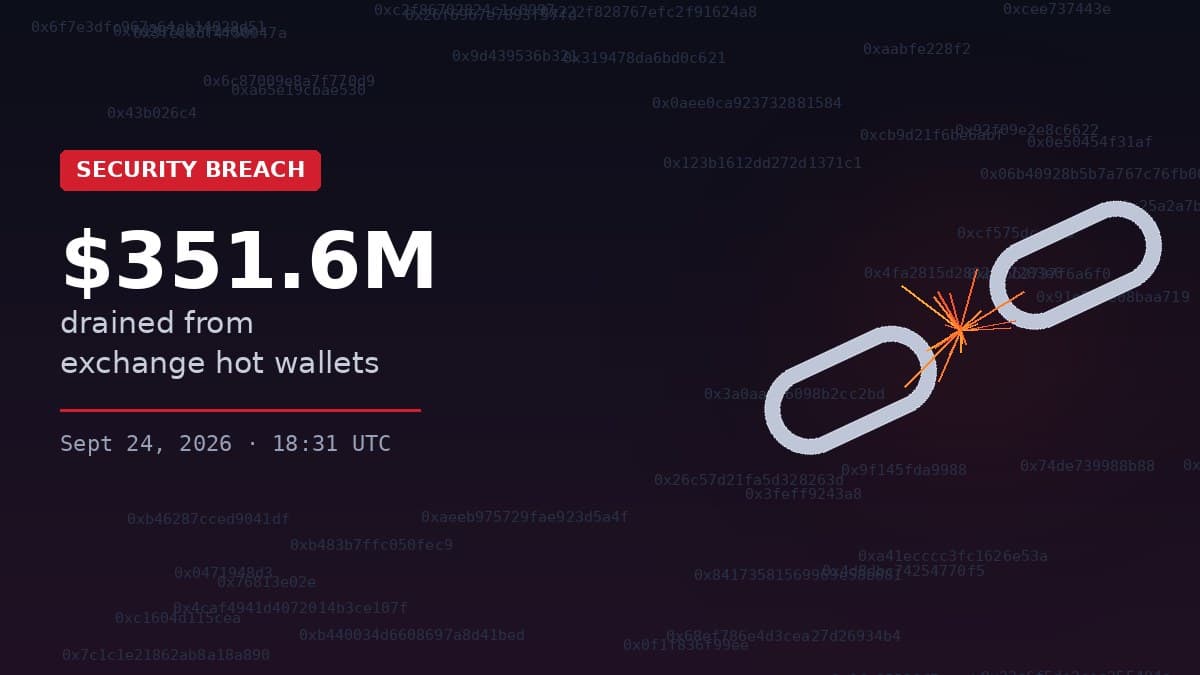
Bitget Hacked for $351.6M: What Happened, Who's Suspected, and Are User Funds Safe?
Bitget, one of the world's ten largest crypto exchanges by trading volume, has confirmed it lost $351.6 million in a security breach on Thursday eveni...
Bitcoin Hovers at $69K as Iran Ceasefire Hopes Fade
Bitcoin gave back Monday's gains on Tuesday morning, falling to around $69,169 as optimism over a US-Iran ceasefire quickly evaporated and President D...
Bitcoin's Worst Q1 Since 2018: The 23% Drop That Rewrote the Record Books
As the first quarter of 2026 closes today, Bitcoin is cementing one of the most difficult starts in its 17-year history. With a quarterly loss approac...
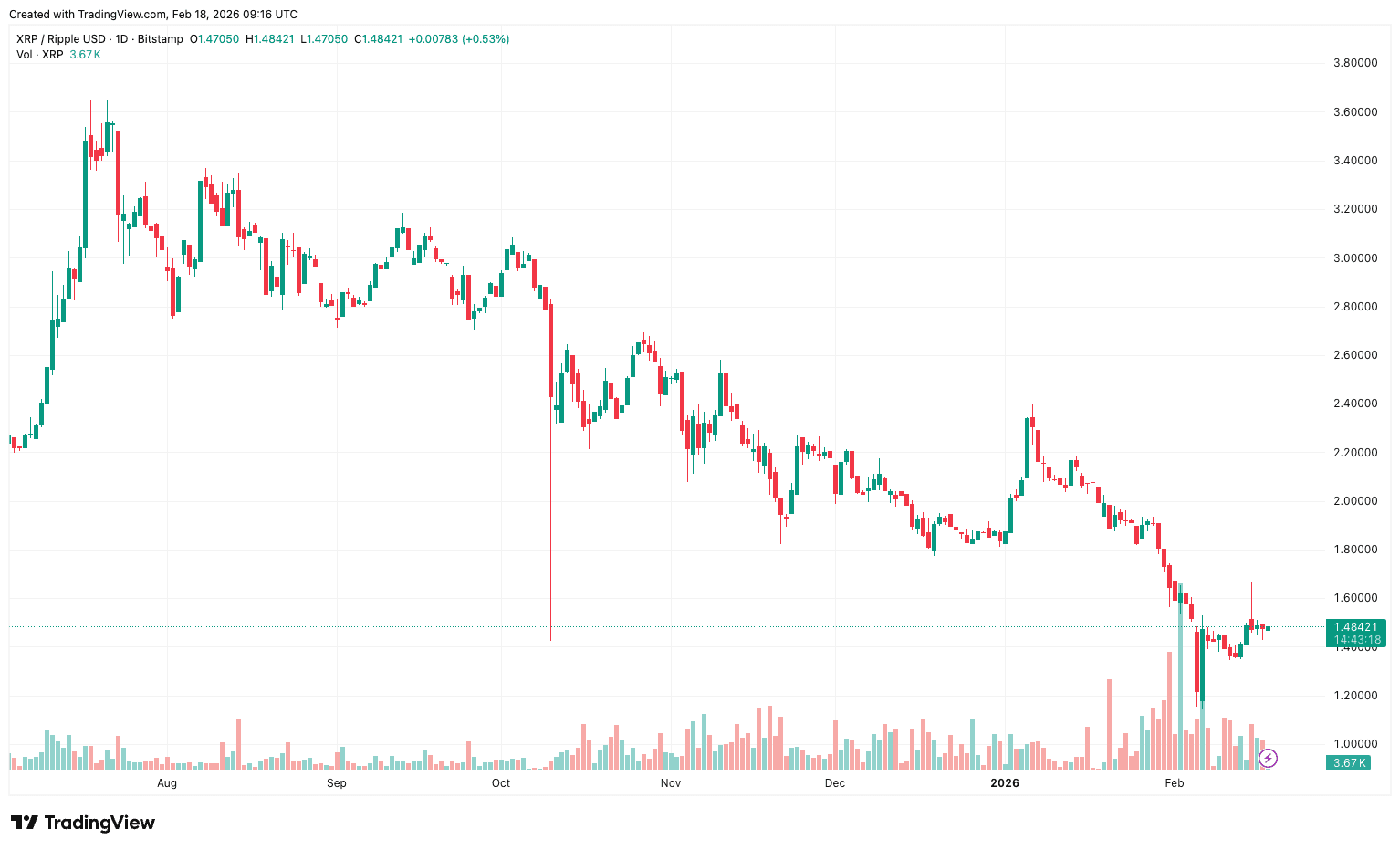
The Wall Street Forecast That Shocked XRP Holders: When Confidence Collapses by 65% Overnight
On a Thursday afternoon in mid-February, one of the world's largest banks did something that sent a chill through the XRP community. Standard Chartere...
Disclaimer: This information is for informational purposes only and does not constitute financial advice. Cryptocurrency investments carry risk. Always do your own research. See our Financial Disclaimer for details.