
Ethereum
Price Chart
Market Cap
24h Volume
7d Change
Circulating Supply
24h High
24h Low
Price Change 24h
Price Statistics
Supply & Market Info
External Resources
About Ethereum
Ethereum is a decentralized, open-source blockchain platform that enables developers to build and deploy smart contracts and decentralized applications (dApps). Launched in 2015 by Vitalik Buterin and a team of co-founders, Ethereum expanded the capabilities of blockchain technology beyond simple value transfer to include programmable transactions and complex decentralized systems.
Unlike Bitcoin, which primarily serves as a digital currency and store of value, Ethereum functions as a global computing platform where developers can create applications that run exactly as programmed without the possibility of downtime, censorship, fraud, or third-party interference.
Ethereum's native cryptocurrency, Ether (ETH), serves multiple purposes: it's used to pay for transaction fees (gas), acts as collateral in DeFi applications, and functions as a store of value. The Ethereum network transitioned from proof-of-work to proof-of-stake consensus in September 2022 in an event known as "The Merge."
Key Features
Smart Contracts
Ethereum introduced smart contracts to blockchain technology—self-executing contracts with the terms directly written into code. These programmable agreements automatically execute when predetermined conditions are met, eliminating the need for intermediaries.
Decentralized Applications (dApps)
Ethereum serves as the foundation for thousands of decentralized applications spanning DeFi, NFTs, gaming, social media, and more. These applications run on the distributed Ethereum network rather than centralized servers.
Ethereum Virtual Machine (EVM)
The EVM is Ethereum's runtime environment for smart contracts. It's a Turing-complete virtual machine that allows anyone to execute arbitrary code, making Ethereum extremely flexible and programmable.
Proof-of-Stake Consensus
Since The Merge in September 2022, Ethereum uses proof-of-stake consensus where validators stake 32 ETH to participate in block validation. This replaced energy-intensive mining and reduced Ethereum's energy consumption by approximately 99.95%.
Diverse Ecosystem
Ethereum hosts the largest developer community in crypto, with the most DeFi protocols, NFT marketplaces, layer-2 scaling solutions, and decentralized applications of any blockchain platform.
Use Cases & Adoption
Decentralized Finance (DeFi)
Ethereum is the dominant platform for DeFi, hosting protocols for lending (Aave, Compound), decentralized exchanges (Uniswap, Curve), derivatives (dYdX), and stablecoins (USDC, DAI). Over $50 billion in value is typically locked in Ethereum DeFi protocols.
Non-Fungible Tokens (NFTs)
Ethereum pioneered NFT standards (ERC-721 and ERC-1155) and hosts the majority of NFT activity, including major marketplaces like OpenSea, art projects, gaming assets, and digital collectibles.
Stablecoins
The majority of stablecoins are issued on Ethereum, including USDT (Tether), USDC (Circle), and DAI (MakerDAO). Over $100 billion in stablecoin value circulates on Ethereum, making it critical infrastructure for crypto payments and trading.
Enterprise Blockchain
Major corporations use Ethereum and Ethereum-compatible private blockchains for supply chain management, identity verification, financial settlements, and other enterprise applications. The Enterprise Ethereum Alliance includes hundreds of companies.
Decentralized Autonomous Organizations (DAOs)
Ethereum enables DAOs—organizations governed by smart contracts and token holder voting rather than traditional corporate structures. These range from investment funds to protocol governance to social clubs.
Web3 and Decentralization
Ethereum serves as foundational infrastructure for Web3, enabling decentralized identity, data storage, social networks, and internet services that give users control over their data and digital assets.
Historical Milestones
2013: Ethereum Concept
Vitalik Buterin published the Ethereum white paper in late 2013, proposing a blockchain with a built-in programming language for creating smart contracts and decentralized applications.
2014: Development and Crowdfunding
Ethereum development began in early 2014 with co-founders including Vitalik Buterin, Gavin Wood, Charles Hoskinson, Anthony Di Iorio, and Joseph Lubin. The project raised approximately $18 million in Bitcoin through a crowdsale in July-August 2014.
2015: Mainnet Launch
The Ethereum mainnet launched on July 30, 2015, with the "Frontier" release, bringing smart contract functionality to the world for the first time.
2016: The DAO Hack and Hard Fork
In June 2016, a vulnerability in The DAO (a decentralized autonomous organization) was exploited, draining about one-third of The DAO's Ether (approximately $50 million at the time). The Ethereum community controversially decided to hard fork to reverse the theft, creating Ethereum (ETH) and Ethereum Classic (ETC).
2017: ICO Boom
Ethereum became the platform of choice for Initial Coin Offerings (ICOs), with the ERC-20 token standard enabling thousands of new token projects. This drove massive demand for ETH and contributed to its price surge.
2017-2018: Bull Run
ETH reached its then-all-time high of approximately $1,432 on January 13, 2018, during the broader cryptocurrency bull market.
2020: DeFi Summer
DeFi protocols on Ethereum exploded in popularity during summer 2020, introducing yield farming, liquidity mining, and innovative financial applications that drove significant ETH demand and usage.
2021: NFT Boom
NFTs became mainstream in 2021, with Ethereum hosting major projects like CryptoPunks, Bored Ape Yacht Club, and Art Blocks. NFT trading volumes on Ethereum reached billions of dollars monthly.
2021: New All-Time High
ETH reached its all-time high of approximately $4,878 on November 10, 2021, driven by DeFi growth, NFT mania, and anticipation of The Merge.
2022: The Merge
On September 15, 2022, Ethereum successfully transitioned from proof-of-work to proof-of-stake in "The Merge," one of the largest technical upgrades in cryptocurrency history. This reduced Ethereum's energy consumption by ~99.95% and changed ETH's issuance rate.
2023: Shapella Upgrade
The Shanghai-Capella upgrade (Shapella) in April 2023 enabled staked ETH withdrawals for the first time since the Beacon Chain launched in December 2020, completing a major milestone in Ethereum's transition to proof-of-stake.
2024: Dencun Upgrade
The Dencun upgrade in March 2024 introduced proto-danksharding (EIP-4844), significantly reducing transaction costs on layer-2 rollups by introducing "blob" transactions for data availability.
How Ethereum Works
Proof-of-Stake Consensus
Ethereum uses proof-of-stake where validators stake 32 ETH to participate in proposing and validating blocks. Validators are randomly selected to propose blocks and earn rewards for honest participation. Dishonest behavior results in "slashing" where validators lose a portion of their staked ETH.
Gas and Transaction Fees
Every operation on Ethereum requires computational resources measured in "gas." Users pay gas fees in ETH to execute transactions and smart contracts. Gas prices fluctuate based on network demand, with fees rising during periods of high activity.
EIP-1559 and Fee Burning
Since the London hard fork in August 2021, Ethereum uses EIP-1559 which introduced a base fee that's burned (destroyed) with each transaction, plus an optional priority fee (tip) that goes to validators. This makes ETH potentially deflationary during periods of high network usage.
Layer-2 Scaling
Ethereum has embraced a "rollup-centric" scaling roadmap where layer-2 solutions (like Arbitrum, Optimism, Base, and zkSync) handle most transactions while settling on Ethereum's base layer for security. This significantly increases throughput and reduces costs.
Smart Contract Execution
When a smart contract is deployed to Ethereum, it becomes immutable code stored on the blockchain. Anyone can interact with public smart contracts by sending transactions, which are executed by the EVM across thousands of nodes.
Wallets and Accounts
Ethereum uses externally owned accounts (controlled by private keys) and contract accounts (controlled by code). Popular wallets include MetaMask, Ledger, Trezor, Coinbase Wallet, and Rainbow.
Ethereum vs. Other Cryptocurrencies
Ethereum vs. Bitcoin
Bitcoin focuses on being decentralized money and a store of value using a simple scripting language. Ethereum is a programmable platform for decentralized applications with Turing-complete smart contracts. Bitcoin is more established as "digital gold," while Ethereum enables complex financial and application ecosystems. Ethereum transactions are faster (12-14 seconds vs. 10+ minutes) but more expensive during network congestion.
Ethereum vs. Competing Smart Contract Platforms
Platforms like Solana, Cardano, Avalanche, and BNB Chain offer faster transactions and lower fees than Ethereum's base layer, but Ethereum has significant advantages: the largest developer community, most battle-tested security, greatest decentralization (especially post-Merge), strongest network effects, and the most total value locked in applications. Ethereum's layer-2 ecosystem addresses scalability while maintaining base-layer security.
Ethereum vs. Ethereum Classic
After the 2016 DAO hack hard fork, Ethereum Classic (ETC) continued on the original chain while Ethereum (ETH) implemented the controversial rollback. ETH has vastly more development activity, applications, and value, while ETC maintains the principle of "code is law" with minimal changes to the original protocol.
Network Effects and Ecosystem
Ethereum's primary competitive advantage is network effects: the most developers building applications, the most users interacting with dApps, the most capital deployed in DeFi protocols, and the most composability between different protocols and applications.
Investment Considerations
Regulatory Environment
As a platform for smart contracts and DeFi, Ethereum faces evolving regulatory scrutiny. While generally treated as a commodity rather than a security in the U.S., regulatory frameworks continue to develop globally. DeFi protocols built on Ethereum face their own regulatory considerations.
Volatility
ETH experiences significant price volatility, though typically less extreme than smaller-cap cryptocurrencies. Prices can fluctuate 10%+ daily during volatile periods, and ETH has experienced multiple 70-90% drawdowns from peak prices historically.
Staking and Yield
ETH holders can stake their tokens (minimum 32 ETH for solo staking, or smaller amounts through pooled staking) to earn approximately 3-4% annual rewards. Liquid staking derivatives allow stakers to maintain liquidity while earning rewards.
Deflationary Mechanics
Since EIP-1559, ETH becomes deflationary during periods of high network usage when more ETH is burned in fees than issued to validators. The Merge reduced ETH issuance by approximately 90%, significantly changing supply dynamics.
Competition and Scalability
Ethereum faces competition from alternative layer-1 blockchains and must continue executing its scalability roadmap (layer-2 rollups, danksharding) to maintain its position. Execution risk on technical upgrades and competition for developers and users remain considerations.
Use Case Validation
ETH's value is closely tied to actual usage of the Ethereum network for DeFi, NFTs, stablecoins, and other applications. Network activity, total value locked, and transaction volumes are important metrics for fundamental analysis.
How to Buy Ethereum
Cryptocurrency Exchanges
ETH is available on virtually all cryptocurrency exchanges including Coinbase, Kraken, Binance, Gemini, Bitstamp, and many others. These platforms allow purchase with fiat currency and storage in exchange wallets.
Decentralized Exchanges (DEXs)
Users can swap other cryptocurrencies for ETH on decentralized exchanges like Uniswap, Curve, or 1inch directly from their wallets without using a centralized intermediary.
Ethereum ETFs
Spot Ethereum ETFs are available in some jurisdictions including Canada and Hong Kong. The U.S. approved spot Ethereum ETFs in July 2024, including products from BlackRock, Fidelity, Grayscale, and other major financial institutions.
Peer-to-Peer Platforms
Various P2P platforms enable direct ETH purchases from other users, though liquidity and fees vary.
Brokerage Apps
Traditional financial apps like Robinhood, PayPal, and Cash App allow ETH purchases, though these typically don't provide actual blockchain custody or the ability to withdraw to personal wallets.
Network Statistics
Transaction Speed
Ethereum produces a new block approximately every 12 seconds. Transaction finality (irreversibility) takes about 15 minutes under normal conditions.
Throughput
Ethereum's base layer handles approximately 15-30 transactions per second. Layer-2 rollups can process thousands of transactions per second while inheriting Ethereum's security.
Energy Consumption
After The Merge, Ethereum's energy consumption dropped by approximately 99.95%. The network now consumes energy comparable to a small town rather than a country, making it one of the most energy-efficient major blockchain networks.
Validators
As of early 2025, there are over 1 million active validators securing the Ethereum network, representing over 32 million ETH staked (approximately 25-30% of total supply).
Total Value Locked (TVL)
Ethereum DeFi protocols typically have $40-80 billion in total value locked (varies with market conditions), representing the majority of all blockchain DeFi activity.
Supply Dynamics
Approximately 120 million ETH are in circulation as of early 2025. Unlike Bitcoin, Ethereum has no hard cap on total supply, though EIP-1559 and The Merge significantly reduced issuance. During high network usage, ETH becomes deflationary.
Frequently Asked Questions
Is Ethereum a good investment?
Ethereum has been one of the best-performing assets over its lifetime, but remains highly volatile and risky. Its investment case depends on continued adoption of DeFi, NFTs, and decentralized applications, successful execution of the technical roadmap, and favorable regulatory developments. ETH serves multiple purposes (gas fees, staking, collateral, store of value) which may support long-term value, but it should be considered a high-risk, speculative investment. Many financial advisors suggest cryptocurrencies should represent only a small portion of a diversified portfolio.
What is "The Merge" and why was it important?
The Merge was Ethereum's transition from proof-of-work (mining) to proof-of-stake (staking) consensus that occurred on September 15, 2022. It was important because it: reduced Ethereum's energy consumption by ~99.95%, making it environmentally sustainable; reduced ETH issuance by ~90%, changing supply economics; and paved the way for future scalability upgrades. The Merge was one of the most complex technical upgrades in blockchain history, executed without downtime on a network securing hundreds of billions in value.
Can Ethereum be mined?
No. Since The Merge in September 2022, Ethereum can no longer be mined. The network now uses proof-of-stake where validators stake 32 ETH rather than using mining hardware. Before The Merge, Ethereum used proof-of-work mining similar to Bitcoin.
What's the difference between Ethereum and Ether (ETH)?
Ethereum is the blockchain network and platform, while Ether (ETH) is the native cryptocurrency that powers the network. It's similar to how you might use "the internet" (network) versus sending an "email" (application). However, in common usage, people often use "Ethereum" to refer to both the network and the cryptocurrency.
How high can Ethereum go?
Price predictions for Ethereum vary widely among analysts. Some predict ETH could reach $10,000+ based on adoption growth, deflationary supply dynamics, and expanding use cases. Others are more conservative or skeptical due to competition, regulatory risks, and market dynamics. Ethereum's market capitalization would need to be in the trillions for extremely high price targets. Future price depends on many unpredictable factors including technology execution, regulatory environment, adoption rates, and overall market conditions.
What is gas and why are Ethereum fees so high sometimes?
Gas measures the computational work required to execute operations on Ethereum. Users pay gas fees to compensate validators and prevent spam. Fees fluctuate based on network demand—during high activity (popular NFT drops, market volatility), fees can reach $50-200+ per transaction. Layer-2 solutions like Arbitrum and Optimism offer the same security with fees typically under $1. The Dencun upgrade in March 2024 dramatically reduced layer-2 costs to pennies or less per transaction.
Is Ethereum decentralized?
Ethereum is considered one of the most decentralized blockchain networks with over 1 million validators, thousands of nodes, a diverse global developer community, and no single entity controlling the network. However, concerns exist around infrastructure centralization (cloud providers, MEV relayers), large staking pools, and development influence. Ethereum is significantly more decentralized than most alternative platforms but less so than Bitcoin in some metrics.
What is Ethereum 2.0?
"Ethereum 2.0" was an outdated term previously used to describe Ethereum's transition to proof-of-stake and future scalability upgrades. The Ethereum Foundation no longer uses this terminology. Instead, they refer to the "consensus layer" (formerly Eth2) and "execution layer" (formerly Eth1) that merged in September 2022. Future upgrades are referred to by their specific names (Shapella, Dencun, etc.) rather than version numbers.
Can Ethereum overtake Bitcoin?
Whether Ethereum could "flip" Bitcoin in market capitalization (an event sometimes called "The Flippening") is debated. Ethereum offers more functionality and use cases, while Bitcoin has stronger brand recognition as "digital gold" and is more established as a store of value. Ethereum has occasionally approached 50-80% of Bitcoin's market cap but has never sustained a flip. Both can potentially coexist serving different purposes in the cryptocurrency ecosystem.
Additional Resources
Official Ethereum Resources
- Ethereum.org - Official Ethereum Foundation website and educational resources
- Ethereum White Paper - Vitalik Buterin's original 2013 proposal
- Ethereum Improvement Proposals (EIPs) - Technical specifications for upgrades
Developer Resources
- Ethereum.org Developer Portal - Comprehensive developer documentation
- Remix IDE - Browser-based development environment for smart contracts
- Hardhat & Foundry - Popular Ethereum development frameworks
- OpenZeppelin - Audited smart contract libraries
Network Explorers and Analytics
- Etherscan - Leading Ethereum blockchain explorer
- DeFi Llama - DeFi protocol analytics and TVL tracking
- Dune Analytics - Community-created blockchain data dashboards
- Ultra Sound Money - ETH supply and burn tracking
Educational Resources
- "The Infinite Machine" by Camila Russo - History of Ethereum's creation
- "Mastering Ethereum" by Andreas Antonopoulos and Gavin Wood - Technical deep dive
- Bankless podcast - Ethereum and crypto education
- Finematics YouTube - DeFi and Ethereum explanations
Community
- r/ethereum - Ethereum subreddit community
- EthHub - Community-driven Ethereum information hub
- Ethereum Magicians - Technical discussion forum
- Various Ethereum-focused Discord servers and forums
Latest News
Bitcoin Hovers at $69K as Iran Ceasefire Hopes Fade
Bitcoin gave back Monday's gains on Tuesday morning, falling to around $69,169 as optimism over a US-Iran ceasefire quickly evaporated and President D...
Bitcoin's Worst Q1 Since 2018: The 23% Drop That Rewrote the Record Books
As the first quarter of 2026 closes today, Bitcoin is cementing one of the most difficult starts in its 17-year history. With a quarterly loss approac...
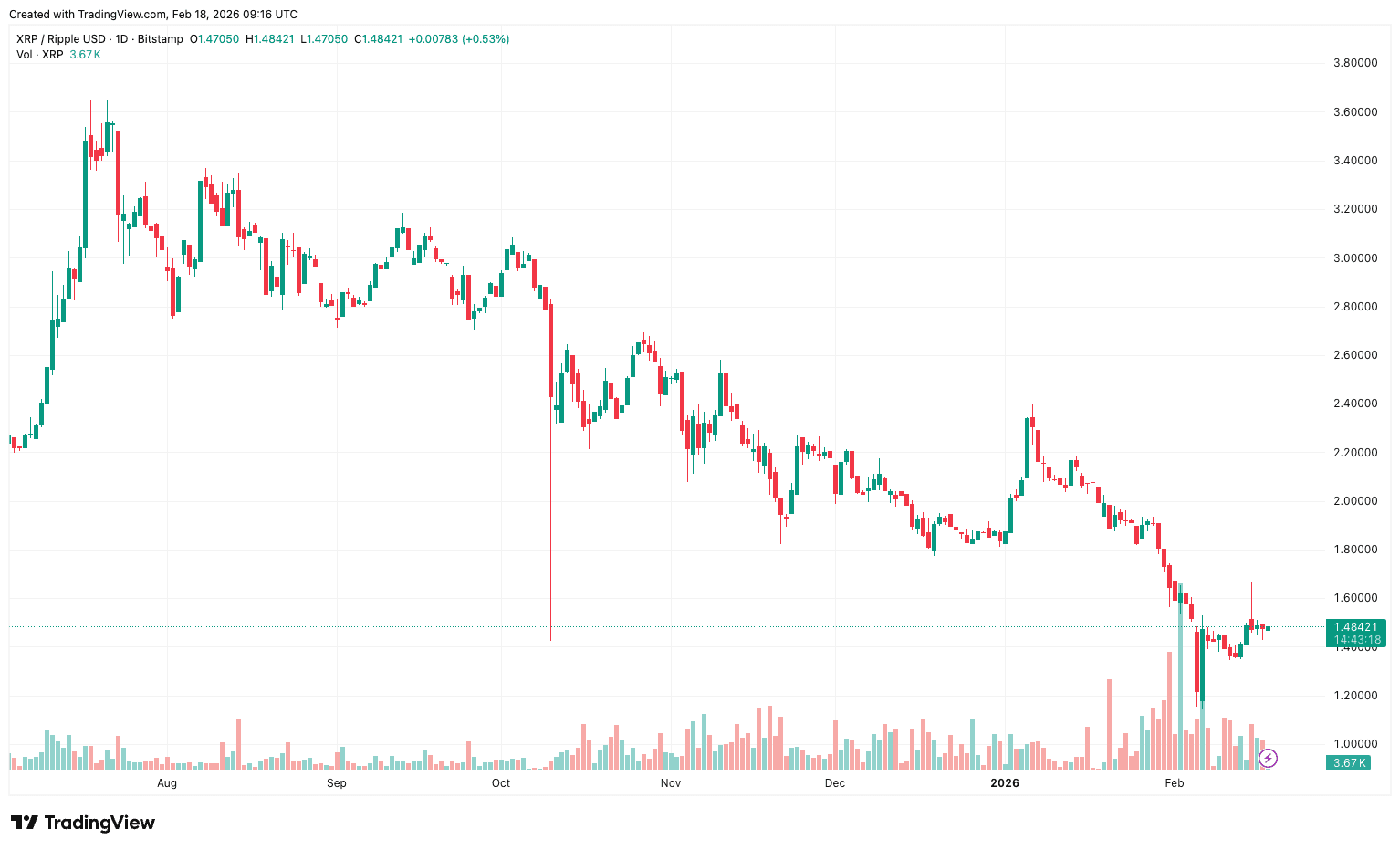
The Wall Street Forecast That Shocked XRP Holders: When Confidence Collapses by 65% Overnight
On a Thursday afternoon in mid-February, one of the world's largest banks did something that sent a chill through the XRP community. Standard Chartere...
BlackRock's Bitcoin Warning: It's Not the ETFs. It's the Leverage.
During one of Bitcoin's worst weeks in years, the man who runs the world's biggest Bitcoin ETF had something surprising to say. It wasn't a price targ...
Disclaimer: This information is for informational purposes only and does not constitute financial advice. Cryptocurrency investments carry risk. Always do your own research. See our Financial Disclaimer for details.