
Tether
Price Chart
Market Cap
24h Volume
7d Change
Circulating Supply
24h High
24h Low
Price Change 24h
Price Statistics
Supply & Market Info
External Resources
What Is Tether (USDT)?
Tether (USDT) is the world's largest stablecoin—a cryptocurrency designed to maintain a stable value of $1 USD. Unlike Bitcoin or Ethereum, which experience significant price volatility, USDT is pegged 1:1 to the US dollar, making it a popular tool for traders, exchanges, and anyone seeking price stability in crypto markets. Tether serves as a bridge between traditional currencies and cryptocurrencies, enabling faster and cheaper transactions than traditional banking systems.
Key Facts About Tether (USDT)
Attribute | Details |
|---|---|
Launch Year | 2014 (originally as "Realcoin") |
Blockchain/Network | Multi-chain: Ethereum, Tron, Solana, Avalanche, Polygon, Bitcoin (Omni Layer), and others |
Primary Use Case | Stablecoin for trading, payments, and value storage |
Consensus Mechanism | Depends on host blockchain (Proof of Stake for Ethereum, etc.) |
Issuer | Tether Limited (Hong Kong) |
Market Cap | ~$140 billion (largest stablecoin globally) |
Known For | Being the most widely used stablecoin; controversies over reserve transparency |
What Is Tether (USDT) Used For?
Tether serves multiple critical functions in the cryptocurrency ecosystem:
1. Trading Pairs on Exchanges
USDT is the most common trading pair on crypto exchanges worldwide. Traders use it to:
- Move between different cryptocurrencies without converting back to fiat
- Lock in profits during market volatility by converting to USDT
- Maintain purchasing power ready to buy crypto without withdrawal delays
2. International Money Transfers
Businesses and individuals use Tether for cross-border payments because:
- Transactions settle faster than traditional wire transfers (minutes vs. days)
- Fees are significantly lower than banks or remittance services
- Available 24/7 unlike traditional banking systems
- No currency conversion fees when both parties accept USDT
3. Liquidity Provider for DeFi
USDT is widely integrated into decentralized finance (DeFi) protocols:
- Lending and borrowing platforms (Aave, Compound)
- Liquidity pools on decentralized exchanges
- Yield farming opportunities
- Collateral for loans and leveraged trading
4. Safe Haven During Market Volatility
When crypto markets crash, traders often:
- Convert volatile assets to USDT to preserve capital
- Wait out market turbulence in stable dollar-denominated holdings
- Avoid the complexity and fees of cashing out to traditional bank accounts
5. Merchant Payments
Some businesses accept USDT for:
- E-commerce transactions
- Freelance and contractor payments
- International business-to-business settlements
What Affects the Price of Tether (USDT)?
While Tether is designed to maintain a $1.00 peg, its price can occasionally deviate due to:
Market Demand and Supply Imbalances
- During extreme market volatility, USDT can briefly trade above $1.00 (premium) when demand surges
- During panic or de-pegging concerns, it can trade slightly below $1.00 (discount)
- Arbitrage traders typically restore the peg quickly
Reserve Transparency Concerns
- Questions about whether Tether holds sufficient reserves to back all USDT in circulation
- Regulatory investigations or legal challenges affecting Tether Limited
- Audit reports or attestations (or lack thereof) impact market confidence
Regulatory Developments
- Stablecoin regulations in major jurisdictions (US, EU, UK)
- Banking restrictions on Tether's ability to hold reserves
- Government actions against Tether Limited or affiliated entities
Competitor Stablecoins
- Rise of alternatives like USDC (Circle), BUSD (previously), or algorithmic stablecoins
- Market share shifts away from or toward USDT
- Trust differentials between competing stablecoins
Exchange Liquidity Issues
- Major exchanges suspending USDT deposits/withdrawals
- Banking partners severing relationships with Tether
- Network congestion on blockchains where USDT operates
Redemption Mechanics
- Tether's policies on who can redeem USDT for USD (typically requires $100,000+ minimum)
- Speed and reliability of redemption process
- Any changes to redemption terms or fees
How Does Tether Maintain Its $1 Peg?
Tether uses several mechanisms to keep USDT stable at $1:
Reserve Backing: Tether Limited claims each USDT is backed by reserves including:
- US dollar cash
- Cash equivalents (Treasury bills, money market funds)
- Commercial paper (historically controversial)
- Other assets and receivables
Arbitrage Mechanism: When USDT trades away from $1:
- If USDT > $1.00: Arbitrageurs buy USD, mint new USDT, and sell it for profit
- If USDT < $1.00: Holders redeem USDT for USD (if eligible) and profit from the difference
Authorized Participants: Large institutions and exchanges can:
- Mint new USDT by depositing USD with Tether Limited
- Redeem USDT for USD (subject to minimum amounts and verification)
Tether vs Other Stablecoins
Feature | Tether (USDT) | USD Coin (USDC) | DAI |
|---|---|---|---|
Type | Centralized | Centralized | Decentralized |
Backing | Fiat reserves (claimed) | Fiat reserves (audited) | Crypto collateral |
Market Cap | ~$140B (largest) | ~$38B (second) | ~$5B |
Transparency | Attestations (controversial) | Regular audits | Fully on-chain |
Issuer | Tether Limited | Circle (with Coinbase) | MakerDAO |
Regulatory Status | Under scrutiny | More compliant | Decentralized (complex) |
Best For | Trading, liquidity | Regulated use cases | DeFi, censorship resistance |
Tether Controversies and Criticisms
Tether has faced significant scrutiny over the years:
Reserve Transparency Issues
- Tether has been criticized for lack of full audits of its reserves
- Previously claimed 100% USD backing, later revealed to include commercial paper and other assets
- Quarterly attestations (not full audits) from accounting firms
- Questions about the quality and liquidity of reserve assets
Legal and Regulatory Challenges
- 2021 settlement with New York Attorney General ($18.5 million fine)
- Allegations of misleading investors about reserves
- Ongoing regulatory scrutiny in multiple jurisdictions
- Concerns about operating without proper banking relationships
Market Manipulation Allegations
- Academic research suggesting USDT issuance correlated with Bitcoin price pumps
- Questions about whether Tether was used to artificially inflate crypto prices in 2017 bull run
- Debate over whether Tether printed unbacked tokens
De-pegging Risks
- Brief de-pegging events during market stress (e.g., May 2022 TerraUSD collapse)
- Concerns about bank run scenarios if many holders tried to redeem simultaneously
- Systemic risk to broader crypto markets given Tether's dominance
Is Tether Safe to Use?
Tether's safety depends on your use case and risk tolerance:
Strengths:
- Most liquid and widely accepted stablecoin
- Survived multiple market crises without catastrophic failure
- Essential infrastructure for crypto trading
- Multi-blockchain availability provides redundancy
Risks:
- Reserve transparency concerns remain unresolved
- Regulatory risks could impact operations
- Centralized control means funds could be frozen
- Historical controversies create trust deficit
Best Practices:
- Don't hold large amounts of USDT long-term if you're risk-averse
- Consider diversifying across multiple stablecoins (USDT, USDC, DAI)
- Only keep amounts you need for active trading
- For long-term storage, traditional bank accounts may be safer
- Stay informed about regulatory developments affecting Tether
Frequently Asked Questions (FAQs)
Is Tether really backed 1:1 by USD?
Tether claims to maintain reserves to back all USDT in circulation, but the composition has changed over time. Currently, reserves include:
- Cash and bank deposits
- Short-term US Treasury bills
- Money market funds
- Other investments and receivables
The company publishes quarterly attestations (not full audits) showing reserve breakdowns. Transparency concerns persist because Tether has never completed a comprehensive independent audit.
Can I redeem USDT for real US dollars?
Yes, but with significant restrictions:
- Minimum redemption typically $100,000 or more
- Must be a verified customer of Tether Limited
- Must pass KYC (Know Your Customer) verification
- Redemption fees apply (typically 0.1%)
- Processing can take several business days
Most retail users can't directly redeem USDT; they sell it on exchanges instead.
What blockchains support Tether?
USDT operates on multiple blockchains:
- Ethereum (ERC-20): Most common, largest supply
- Tron (TRC-20): Popular for lower transaction fees
- Solana (SPL): Fast and cheap transactions
- Avalanche, Polygon, Algorand: Growing alternatives
- Bitcoin (Omni Layer): Original implementation, now rare
- Others: BSC, Fantom, Kusama, and more
Always verify which network you're using when sending or receiving USDT—tokens are not interchangeable between blockchains.
Has Tether ever lost its peg?
USDT has briefly traded away from $1.00 several times:
- May 2022: Dropped to ~$0.95 during TerraUSD collapse panic
- March 2023: Briefly fell to ~$0.985 during banking crisis concerns
- Various occasions: Traded at small premiums ($1.01-$1.02) during high demand
However, Tether has always restored its peg relatively quickly through arbitrage and market mechanisms. Unlike algorithmic stablecoins (e.g., UST), USDT has never completely collapsed.
Is Tether centralized?
Yes, Tether is highly centralized:
- Issuance: Only Tether Limited can mint new USDT
- Redemption: Only authorized parties can redeem directly
- Freezing: Tether can freeze addresses and blacklist tokens
- Reserves: Held by Tether Limited's banking partners
- Governance: No community voting or decentralized control
This centralization provides benefits (stability, regulatory compliance) but creates risks (censorship, counterparty risk, regulatory vulnerability).
Why do traders prefer USDT over USDC or other stablecoins?
USDT dominance comes from:
- First-mover advantage: Established in 2014, deeply integrated everywhere
- Liquidity: Highest trading volumes across all exchanges
- Trading pairs: More crypto pairs available with USDT than alternatives
- Global reach: Accepted on virtually every exchange worldwide
- Offshore appeal: Less strict compliance than USDC appeals to some users
However, many institutions and US-based users prefer USDC due to better transparency and regulatory compliance.
What happens to Tether if crypto regulations tighten?
Potential scenarios:
- Increased compliance: Tether might be forced to provide regular audits and improve transparency
- Licensing requirements: May need to obtain stablecoin licenses in various jurisdictions
- Reserve standards: Could be required to hold only high-quality liquid assets
- Operational restrictions: Banking partnerships might become harder to maintain
- Market share loss: Stricter regulations might favor more compliant stablecoins like USDC
The long-term impact depends heavily on how global regulators approach stablecoin oversight.
Can governments shut down Tether?
While challenging, governments could:
- Force exchanges to delist USDT
- Prosecute Tether Limited's operators
- Freeze Tether's banking relationships
- Prohibit citizens from using USDT
However, Tether's multi-blockchain presence and global distribution make complete shutdown difficult. Realistically, regulatory pressure would more likely force operational changes rather than total elimination.
Risk Disclaimer
Tether (USDT) is a stablecoin designed to maintain a $1 peg, but it is not insured or guaranteed by any government. The value of USDT depends on Tether Limited's ability to maintain adequate reserves and operate effectively. Stablecoin regulations are evolving, and Tether's legal and operational status may change.
This page provides educational information only and does not constitute financial advice. Cryptocurrency holdings, including stablecoins, carry risks including potential loss of value, regulatory changes, and counterparty risk. Only hold amounts you can afford to lose, and consider diversifying across multiple stablecoins if you need stable crypto holdings.
Last Updated: February 2, 2026
Information compiled from: Tether Limited disclosures, blockchain data, regulatory filings, industry analysis
Latest News
Bitcoin Hovers at $69K as Iran Ceasefire Hopes Fade
Bitcoin gave back Monday's gains on Tuesday morning, falling to around $69,169 as optimism over a US-Iran ceasefire quickly evaporated and President D...

Bitcoin's Worst Q1 Since 2018: The 23% Drop That Rewrote the Record Books
As the first quarter of 2026 closes today, Bitcoin is cementing one of the most difficult starts in its 17-year history. With a quarterly loss approac...
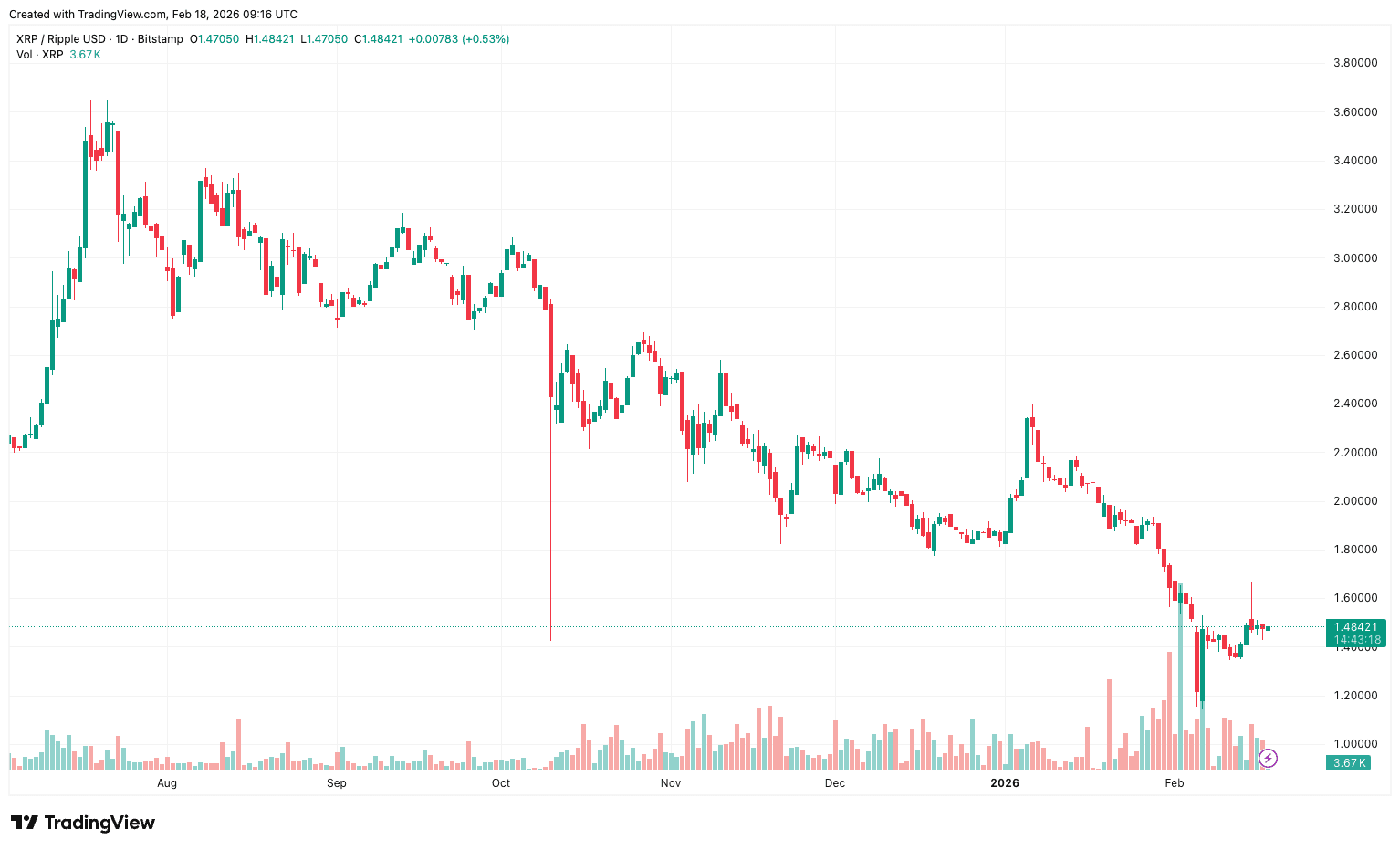
The Wall Street Forecast That Shocked XRP Holders: When Confidence Collapses by 65% Overnight
On a Thursday afternoon in mid-February, one of the world's largest banks did something that sent a chill through the XRP community. Standard Chartere...
BlackRock's Bitcoin Warning: It's Not the ETFs. It's the Leverage.
During one of Bitcoin's worst weeks in years, the man who runs the world's biggest Bitcoin ETF had something surprising to say. It wasn't a price targ...
Disclaimer: This information is for informational purposes only and does not constitute financial advice. Cryptocurrency investments carry risk. Always do your own research. See our Financial Disclaimer for details.