The Tiny Kingdom That Mines Bitcoin: Why Bhutan Has Sold $29M in BTC Over Three Weeks — and Still Holds $372M More

A country of fewer than 800,000 people — smaller than San Francisco — has been quietly selling Bitcoin for the third week in a row. Most people have no idea Bhutan even owns crypto. Even fewer know that this small Himalayan kingdom is the seventh-largest sovereign Bitcoin holder on earth, or that it built that position not by buying BTC on an exchange, but by mining it from its own mountains using surplus hydroelectric power.
On February 12, on-chain data tracked by Arkham Intelligence confirmed that the Royal Government of Bhutan transferred another 100 BTC — worth approximately $6.77 million — to a merchant deposit address linked to QCP Capital. It was the third such transfer in three consecutive weeks. Total sales over that window: roughly $29 million.
The headlines screamed "Bhutan dumps Bitcoin." As usual, the real story is considerably more interesting.
A Kingdom You Probably Know Nothing About
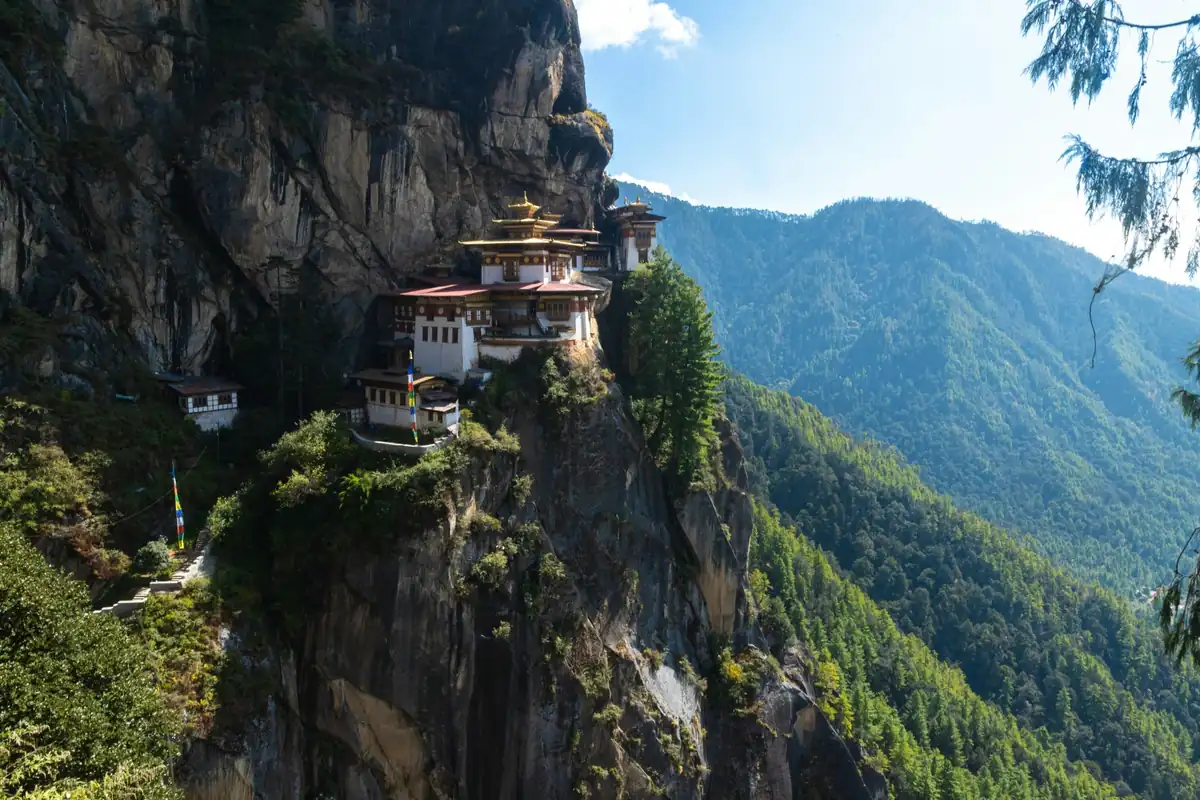
Bhutan sits landlocked between India and China in the Eastern Himalayas. Its entire GDP is roughly $3 billion — less than the annual revenue of a mid-sized American tech company. It is best known internationally for measuring national success through "Gross National Happiness" rather than GDP, for its carbon-negative environmental record, and for being one of the last countries on earth to introduce television, in 1999.
What it is considerably less famous for is being a sophisticated state-level Bitcoin operator.
The country's sovereign investment arm, Druk Holding and Investments (DHI), launched Bitcoin mining operations in 2019. The reasoning was straightforward: Bhutan is blessed with an extraordinary abundance of hydroelectric power, generated by rivers fed by Himalayan glaciers. During non-monsoon seasons especially, that power goes largely underutilized. Rather than let it go to waste, DHI quietly began converting surplus electricity into Bitcoin.
The economics were extraordinary. Mining Bitcoin with cheap, renewable hydroelectricity kept Bhutan's production costs a fraction of global averages. While the average all-in cost to mine one Bitcoin globally has climbed to roughly $87,000 in early 2026, Bhutan's hydro-powered operations were producing at far lower expense. By 2023, the country had mined its most productive year ever — approximately 8,200 BTC — turning a resource it already had in abundance into a financial reserve that most nations its size could never dream of accumulating.
By October 2024, Bhutan's identified wallets held 13,295 BTC. At Bitcoin's peak price of $126,000 the same month, that position was worth over $1.4 billion — nearly half the country's annual GDP.
From Accumulator to Manager
That was then.
The April 2024 Bitcoin halving changed Bhutan's calculus. Every four years, Bitcoin's protocol cuts the reward given to miners in half — reducing the supply of new coins entering circulation. The 2024 halving slashed block rewards from 6.25 BTC to 3.125 BTC, effectively doubling the production cost per coin for every miner in the world. For Bhutan, whose hydroelectric advantage had made accumulation unusually profitable, the halving reduced but did not eliminate that edge.
Combined with Bitcoin's price decline — which saw BTC fall from $126,000 in October 2025 to the current $66,000 range — the economics of aggressive accumulation no longer made sense. Bhutan shifted from building its position to actively managing it.
The first major signal came in September 2025, when the government sold approximately $100 million in Bitcoin to fund national priorities. Then, three weeks ago, a new pattern began: controlled weekly transfers of 100 BTC routed through QCP Capital, a Singapore-based institutional crypto liquidity provider.
The transactions are not random. QCP Capital's WBTC merchant deposit address is not an exchange hot wallet — it is an institutional channel used for structured liquidity management. Bhutan is not dumping its Bitcoin in a panic. It is converting holdings through an institutional counterparty in controlled batches that are specifically designed to avoid creating market impact.
Why It Is Selling Now
Three factors are driving the current sales, and none of them are fear.
The first is operational economics. Bhutan's partnership with Bitdeer Technologies aimed to expand national mining capacity toward 600 megawatts. Post-halving mining output has slowed significantly, making new BTC accumulation less attractive at current price levels. The government is monetizing existing holdings rather than continuing to expand infrastructure that generates diminishing returns in a lower-price environment.
The second is domestic spending. Bhutan implemented a 50% salary increase for civil servants as part of a broader program of economic development, and the government has accelerated infrastructure investment across the country. Converting a portion of BTC reserves into usable capital is the most efficient way to fund these commitments without raising debt or cutting other programs. Bhutan treats its Bitcoin the way a central bank would treat gold — as a strategic reserve asset that can be selectively liquidated to fund national priorities.
The third is the current Bitcoin price environment. At $66,000, Bitcoin is down 47% from its October 2025 all-time high. Yet it remains well above the price at which Bhutan accumulated most of its holdings through mining. Selling at $66,000 still represents a substantial return on production cost. The same backdrop that is causing distress for leveraged traders — the same market conditions that drove the largest mining difficulty drop since China's 2021 ban last month — represents a profitable exit for a sovereign miner whose cost basis is far below current prices.
The Numbers That Put It in Context
It is worth being precise about what Bhutan has done and what it still holds.
Since peak holdings in October 2024, the government has sold or transferred approximately 7,595 BTC. At various price points across that period, this represents several hundred million dollars in realized value. The current three-week run alone totals $29 million: $8.31 million two weeks ago, approximately $22.4 million last week, and $6.77 million on February 12.
Despite those sales, Bhutan retains approximately 5,600 BTC worth roughly $372 million at current prices. That is not a fire-sale. That is a sovereign wealth fund making measured portfolio adjustments. For a country with a total GDP of $3 billion, holding $372 million in Bitcoin is the equivalent of a major economy holding tens of billions in reserve assets. The position is, by any measure, enormous relative to the size of the economy.
Bhutan remains, as of this week, the seventh-largest nation-state Bitcoin holder globally. It sits alongside the United States (which holds seized BTC), China (ditto), and El Salvador (which bought BTC at the government level) as one of the handful of sovereign actors genuinely participating in the Bitcoin economy at scale.
What It Signals
The Bhutan story matters beyond Bhutan because it represents something new in the global Bitcoin narrative: sovereign actors using BTC as an active balance-sheet tool rather than a passive bet.
El Salvador, the most famous sovereign Bitcoin experiment, bought BTC at market prices as a political statement and required significant IMF pressure before moderating its position. Bhutan built its position through production, managed it like a central bank manages gold, and is now deploying it to fund domestic priorities during a down market — all without making a single political speech about it.
That approach — quiet, production-based, tactically managed — is fundamentally different from the retail-investor framework most people apply when they see "Bhutan sells Bitcoin" in a headline. It is closer to what Norway does with its sovereign wealth fund or what oil-producing nations do with petrodollar reserves. The asset happens to be Bitcoin. The underlying logic is conventional sovereign treasury management.
It also raises a question that other small nations with renewable energy surpluses are beginning to ask: if Bhutan could mine $765 million in Bitcoin on $120 million in electricity costs over seven years, what does that say about the opportunity cost of leaving surplus energy capacity idle? Bhutan will not be the last country to think seriously about that question, particularly in a world where Bitcoin mining infrastructure is becoming more efficient and the regulatory environment around state-level crypto activity is beginning to mature — reflected in the ongoing legislative battles over digital asset rules in Washington and similar processes playing out in the EU and Asia.
What Comes Next for Bhutan
The 21-day selling cadence suggests the current pattern will continue for at least another few weeks. If Bitcoin remains in the $60,000–$70,000 range — the consolidation zone that has dominated price action since the February 5 crash, and which marked Bitcoin's first-ever back-to-back negative January and February — Bhutan will continue extracting value from a position it built at far lower cost.
If Bitcoin recovers toward $80,000–$90,000, the calculus shifts. At those prices, the DHI would be selling reserves that are worth considerably more. The pace of sales would likely slow as the opportunity cost of liquidating increases.
If Bitcoin falls below $60,000 — the critical support level that has held so far — Bhutan faces no existential threat. Its hydro-powered mining infrastructure means its average production cost is well below the global average of $87,000. Even at $55,000, Bhutan's cost advantage likely keeps it above break-even. The position is not leveraged. There is no forced selling.
This is what it looks like when a sovereign actor has built a Bitcoin position correctly: from the bottom up, with production rather than speculation, with enough operational cushion to manage through a downturn without panic.
The tiny kingdom is not dumping Bitcoin. It is running a treasury.
References:
- Arkham Intelligence (on-chain wallet tracking)
- Cryptopolitan — "Royal Government of Bhutan extends Bitcoin sell-off with latest transfer" (Feb 13, 2026)
- CoinDesk — "Bhutan Moves Bitcoin to Trading Firms and Exchanges as BTC Drops" (Feb 5, 2026)
- CCN / Yahoo Finance — "Bhutan's Bitcoin Offloading Continues for the Third Week" (Feb 13, 2026)
- CryptoTimes — "Bhutan Continues Strategic Bitcoin Sell-Off With Latest 100 BTC Sale" (Feb 13, 2026)
- Coinpedia — "Bhutan Sells Another $6.7M in Bitcoin" (Feb 13, 2026)
- FinanceFeeds — "Bhutan Accelerates Bitcoin Sales as Sovereign Crypto Strategy Evolves" (Feb 13, 2026)
- Druk Holding and Investments (DHI) — sovereign wealth arm of the Royal Government of Bhutan
- QCP Capital — institutional crypto liquidity provider, Singapore
Disclaimer: This article is for informational purposes only and does not constitute financial advice. Cryptocurrency investments carry risk. Always do your own research. See our Financial Disclaimer for details.