
XRP
Price Chart
Market Cap
24h Volume
7d Change
Circulating Supply
24h High
24h Low
Price Change 24h
Price Statistics
Supply & Market Info
External Resources
About XRP
XRP is a digital asset designed specifically for payments and cross-border transactions. Created in 2012, XRP operates on the XRP Ledger (XRPL), an open-source, decentralized blockchain that was built to enable fast, low-cost international money transfers.
It's important to distinguish between XRP (the digital asset) and Ripple Labs (the company). While Ripple Labs is a major holder of XRP and uses it in some of its payment solutions, XRP and the XRP Ledger are independent, open-source technologies that exist separately from the company.
The XRP Ledger uses a unique consensus protocol rather than proof-of-work mining, allowing it to process transactions in 3-5 seconds with minimal energy consumption and transaction fees typically under $0.01.
Key Features
Speed and Efficiency
XRP transactions settle in 3-5 seconds, significantly faster than Bitcoin (10-60 minutes) or traditional international wire transfers (3-5 days). The network can handle approximately 1,500 transactions per second.
Low Transaction Costs
Transaction fees on the XRP Ledger are extremely low, typically costing fractions of a cent (around 0.00001 XRP). This makes XRP practical for micropayments and frequent transactions.
Energy Efficient
Unlike proof-of-work cryptocurrencies, the XRP Ledger uses a consensus protocol that consumes significantly less energy. The network is carbon-neutral, making it one of the most environmentally sustainable blockchain platforms.
Decentralized Consensus
The XRP Ledger uses a consensus protocol with a network of independent validators. Anyone can run a validator, and the Unique Node List (UNL) allows validators to choose which other validators they trust to reach consensus.
Pre-mined Supply
Unlike Bitcoin, XRP was not created through mining. All 100 billion XRP were created when the ledger launched in 2012. No new XRP can be created, and small amounts are destroyed with each transaction as fees.
Use Cases & Adoption
Cross-Border Payments
XRP's primary use case is facilitating fast, low-cost international money transfers. Financial institutions use XRP as a bridge currency to settle cross-border payments without needing to hold multiple foreign currency accounts (pre-funded nostro/vostro accounts).
Liquidity Solution
Ripple's On-Demand Liquidity (ODL) service uses XRP to provide instant liquidity for cross-border payments. This allows payment providers to send money across borders without tying up capital in foreign accounts.
Payment Corridors
XRP is actively used in payment corridors worldwide, particularly for remittances between the United States, Mexico, the Philippines, and various other countries. Money transfer companies and banks have integrated XRP-based solutions.
Institutional Adoption
Various financial institutions and payment providers have partnered with Ripple or integrated XRP-based solutions, including banks, remittance companies, and payment service providers across multiple continents.
Decentralized Finance (DeFi)
The XRP Ledger supports decentralized exchange functionality, tokenization, and is expanding into DeFi applications with features like automated market makers (AMMs) and smart contract capabilities through sidechains.
Historical Milestones
2011-2012: Creation
The XRP Ledger was created by developers Jed McCaleb, Arthur Britto, and David Schwartz. The ledger went live in June 2012 with 100 billion XRP pre-mined.
2012: Ripple Labs Founded
OpenCoin (later renamed Ripple Labs) was founded in September 2012 to develop the XRP Ledger and commercial applications. The founders received 80 billion XRP, with the remaining 20 billion going to the creators.
2013: Early Banking Interest
Ripple began partnerships with financial institutions to test its payment technology, positioning XRP as a bridge currency for international transfers.
2017-2018: Major Bull Run
XRP reached its all-time high of approximately $3.84 on January 4, 2018, becoming the second-largest cryptocurrency by market capitalization at the time.
2020: SEC Lawsuit Filed
On December 22, 2020, the U.S. Securities and Exchange Commission filed a lawsuit against Ripple Labs, CEO Brad Garlinghouse, and co-founder Chris Larsen, alleging that XRP was an unregistered security. This led to many exchanges delisting or suspending XRP trading in the United States.
2023: Partial Legal Victory
On July 13, 2023, Judge Analisa Torres ruled that XRP sold on public exchanges is not a security, though institutional sales of XRP may constitute securities offerings. This was viewed as a significant partial victory for Ripple, leading to XRP price surges and some exchanges relisting the token.
2024: Legal Proceedings Continue
The SEC case continues with ongoing appeals and legal proceedings. The outcome remains significant for XRP and the broader cryptocurrency regulatory landscape in the United States.
How XRP Works
Consensus Protocol
Instead of mining, the XRP Ledger uses a consensus protocol where designated validators agree on the order and validity of XRP transactions. Validators are independent participants who can be added or removed from individual Unique Node Lists (UNLs).
Transaction Process
When an XRP transaction is submitted, it's broadcast to validators on the network. Validators independently verify the transaction and reach consensus on which transactions to include in the next ledger version. This process takes 3-5 seconds.
Transaction Fees and Burning
Every XRP transaction requires a small fee (typically 0.00001 XRP), which is destroyed or "burned" rather than going to validators. This deflationary mechanism means the total XRP supply gradually decreases over time, though the reduction is extremely minimal.
Escrow and Supply Management
Ripple Labs holds a significant portion of XRP (originally about 55 billion) in cryptographically secured escrow accounts. These accounts release a maximum of 1 billion XRP per month, with any unused XRP returned to escrow. This mechanism was implemented in 2017 to provide supply predictability.
Wallets and Reserves
XRP wallets require a reserve of 10 XRP to remain active on the ledger (this amount can be adjusted by validators). Additional reserves are required for advanced features like trust lines and offers on the decentralized exchange.
XRP vs. Other Cryptocurrencies
XRP vs. Bitcoin
While Bitcoin focuses on being a decentralized store of value using proof-of-work mining, XRP is designed specifically for fast, efficient payments using a consensus protocol. XRP transactions are much faster (3-5 seconds vs. 10-60 minutes) and cheaper, but Bitcoin has greater decentralization and is more widely recognized as "digital gold."
XRP vs. Ethereum
Ethereum is a smart contract platform designed for decentralized applications, while XRP focuses primarily on payment use cases. Ethereum has a much larger developer ecosystem and DeFi ecosystem, but XRP offers faster and cheaper transactions for simple value transfers.
XRP vs. Stellar (XLM)
Stellar was created by Jed McCaleb, one of XRP's original creators, and shares similar technology focused on cross-border payments. Both use consensus protocols and target financial institutions, but Stellar focuses more on financial inclusion and individual remittances, while Ripple targets institutional payment providers and banks.
Corporate Connection
Unlike most major cryptocurrencies, XRP has a close association with Ripple Labs, which holds significant amounts of XRP and uses it in commercial products. This relationship is both an advantage (driving institutional adoption) and a point of concern for those preferring fully decentralized cryptocurrencies.
Investment Considerations
Regulatory Uncertainty
The ongoing SEC lawsuit and regulatory status of XRP in the United States create significant uncertainty. While the July 2023 ruling was positive for XRP holders and the broader market, appeals and regulatory clarity remain ongoing concerns.
Centralization Concerns
Critics point to Ripple Labs' significant XRP holdings and influence over the ecosystem as potential centralization risks. However, the XRP Ledger itself is open-source and can operate independently of Ripple.
Volatility
Like other cryptocurrencies, XRP experiences significant price volatility. XRP has historically been among the more volatile major cryptocurrencies, with price swings often amplified by news related to the SEC case and partnership announcements.
Use Case Validation
XRP's value proposition depends on adoption by financial institutions for cross-border payments. While there are active use cases, particularly through Ripple's ODL service, broader adoption and the competitive landscape with other payment solutions remain key factors.
Supply Distribution
A significant portion of XRP supply is held by Ripple Labs and the founders. While escrow mechanisms provide some predictability, this concentration is a consideration for potential investors.
How to Buy XRP
Cryptocurrency Exchanges
XRP is available on most major international exchanges including Binance, Kraken, Bitstamp, Coinbase (relisted in some regions), Huobi, and others. U.S. availability has varied due to the SEC lawsuit, with some exchanges delisting and later relisting XRP.
Peer-to-Peer Platforms
Various P2P platforms allow direct purchase of XRP from other users, though liquidity and availability vary by region.
Custody Considerations
Due to the 10 XRP reserve requirement, users should be aware that this amount will be locked in any active XRP wallet and cannot be spent while the wallet remains active.
Regional Restrictions
Availability varies significantly by jurisdiction. Always check local regulations and exchange availability in your region before attempting to purchase XRP.
Network Statistics
Transaction Speed
The XRP Ledger consistently processes transactions in 3-5 seconds, with new ledger versions closing approximately every 3-4 seconds.
Throughput Capacity
The network can handle approximately 1,500 transactions per second, with the theoretical capacity to scale higher through future improvements.
Energy Consumption
The XRP Ledger uses significantly less energy than proof-of-work blockchains. Ripple has committed to carbon neutrality and the network's energy consumption is comparable to a few hundred U.S. households rather than entire countries.
Validators
The XRP Ledger has over 150 validators globally, operated by individuals, exchanges, institutions, and Ripple Labs. The default UNL includes approximately 35 trusted validators.
Total Supply
100 billion XRP were created at inception. As of early 2025, approximately 55-57 billion XRP are in circulation, with the remainder held in escrow by Ripple Labs or held by founders and early participants. The exact circulating supply fluctuates based on escrow releases and market activities.
Frequently Asked Questions
Is XRP a good investment?
XRP carries significant regulatory risk due to ongoing legal proceedings in the United States and potential future regulatory actions in other jurisdictions. While the July 2023 court ruling was positive, appeals continue and regulatory clarity remains uncertain. XRP's investment case depends on institutional adoption for payments, resolution of legal issues, and broader cryptocurrency market conditions. As with all cryptocurrencies, it should be considered a high-risk, speculative investment.
Is XRP a security?
This remains a contested legal question. In July 2023, a U.S. federal judge ruled that XRP sold on public exchanges is not a security under the Howey Test, but institutional sales of XRP may constitute securities offerings. The SEC is appealing aspects of this ruling, and the final regulatory classification in the U.S. and globally remains unsettled.
What's the difference between XRP and Ripple?
XRP is the digital asset that operates on the XRP Ledger, an open-source blockchain. Ripple Labs is a private company that develops payment technology and solutions, some of which utilize XRP. While Ripple is a major XRP holder and promotes its use, the XRP Ledger can function independently of Ripple Labs.
Can XRP reach $10, $100, or higher?
Price predictions for XRP vary widely. Reaching higher price points would require substantial market capitalization increases. At $10 per XRP, the market cap would exceed $500 billion (based on current circulating supply). At $100 per XRP, it would be several trillion dollars. Whether this is achievable depends on adoption, market conditions, regulatory clarity, and broader cryptocurrency market dynamics. Most analysts consider extremely high price targets ($100+) highly unlikely in the near to medium term.
Why is XRP so cheap compared to Bitcoin?
Price per unit is not a meaningful comparison between cryptocurrencies. Bitcoin has 19.8 million coins in circulation, while XRP has over 55 billion. Market capitalization (price × circulating supply) is a better comparison metric. XRP's lower price per unit reflects its much larger supply, not necessarily lower value or potential.
How does Ripple's escrow affect XRP price?
Ripple releases up to 1 billion XRP from escrow monthly, though typically most is returned unused. This creates predictable supply dynamics. While large escrow releases could theoretically create selling pressure, Ripple's sales have historically been managed to avoid market disruption, and the company publishes quarterly reports on XRP sales and usage.
Is XRP decentralized?
This is debated. The XRP Ledger is open-source and operates through a network of independent validators, meeting some decentralization criteria. However, Ripple Labs operates many validators and holds significant XRP supply, leading to concerns about centralization. The level of decentralization is greater than fully centralized systems but less than Bitcoin or similar proof-of-work cryptocurrencies.
What happens if Ripple Labs goes out of business?
The XRP Ledger is open-source and operates independently through its validator network. If Ripple Labs ceased operations, the XRP Ledger would continue functioning as long as validators remain active. However, development, promotion, and institutional adoption efforts would likely be significantly impacted.
Additional Resources
Official XRP Resources
- XRPL.org - Official XRP Ledger documentation and developer resources
- XRP Ledger Foundation - Non-profit supporting XRP Ledger development
- Ripple.com - Ripple Labs corporate website (separate from XRP Ledger)
Developer Resources
- XRPL Developer Portal - Technical documentation and guides
- GitHub - XRP Ledger open-source code repositories
- XRP Ledger Explorer - Blockchain explorer for viewing transactions
Educational Resources
- XRP Ledger documentation for understanding consensus protocol
- Community forums and discussion groups
- Various educational content about blockchain payments and XRP technology
Legal and Regulatory
- SEC vs. Ripple case documents (publicly available court filings)
- Ripple's quarterly XRP markets reports
- Regulatory news and analysis from crypto-focused media outlets
Latest News
Bitcoin Hovers at $69K as Iran Ceasefire Hopes Fade
Bitcoin gave back Monday's gains on Tuesday morning, falling to around $69,169 as optimism over a US-Iran ceasefire quickly evaporated and President D...
Bitcoin's Worst Q1 Since 2018: The 23% Drop That Rewrote the Record Books
As the first quarter of 2026 closes today, Bitcoin is cementing one of the most difficult starts in its 17-year history. With a quarterly loss approac...
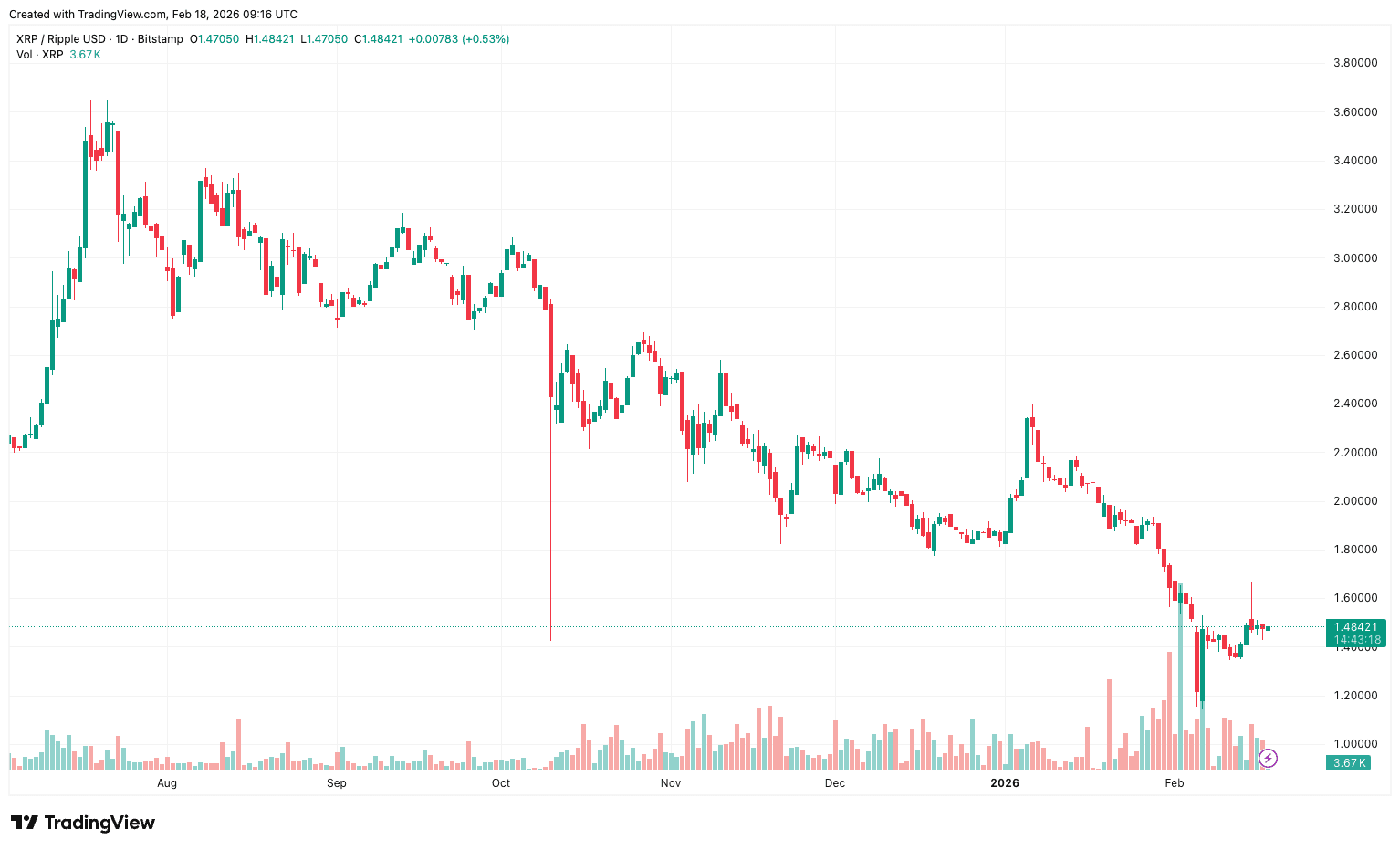
The Wall Street Forecast That Shocked XRP Holders: When Confidence Collapses by 65% Overnight
On a Thursday afternoon in mid-February, one of the world's largest banks did something that sent a chill through the XRP community. Standard Chartere...
BlackRock's Bitcoin Warning: It's Not the ETFs. It's the Leverage.
During one of Bitcoin's worst weeks in years, the man who runs the world's biggest Bitcoin ETF had something surprising to say. It wasn't a price targ...
Disclaimer: This information is for informational purposes only and does not constitute financial advice. Cryptocurrency investments carry risk. Always do your own research. See our Financial Disclaimer for details.